LinqTV Blog
Adaptive Learning - What, How, Why, and more…
Discover what adaptive learning is, how it works, and why it
If you are evaluating Adaptive Learning What HOW WHY AND More, this guide covers what it is, how it works in production, and how to deliver it reliably as part of a modern streaming service.
How it works
Per-title and content-aware encoding analyze each video to assign just enough bitrate for the quality target, cutting delivery cost without visible quality loss.
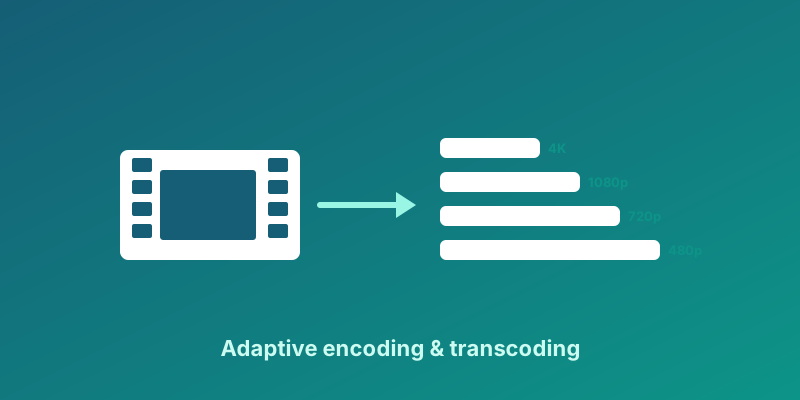
A source is decoded then re-encoded with a codec such as H.264, HEVC or AV1 into a ladder of resolutions and bitrates, and packaged into HLS and DASH so any player can pick the best rung for current bandwidth.
Key benefits
- Captions, multi-audio and thumbnail-track generation
- Per-title and content-aware encoding to cut bandwidth cost
- HLS and DASH packaging from a single mezzanine file
Building this on LinqTV
LinqTV transcodes your sources into adaptive H.264, HEVC and AV1 ladders and packages HLS and DASH automatically, with per-title encoding to control cost.
Because every module shares identity, billing, metadata and analytics, you avoid brittle point-to-point integrations and ship new features faster.
Getting it right
- Use per-title encoding to avoid over-spending bitrate on simple content
- Pick codecs by reach: H.264 plays everywhere, HEVC/AV1 save bandwidth on newer devices
- Design the bitrate ladder around your real audience devices and networks
Frequently asked questions
How quickly can we launch?
Most teams pilot in a matter of weeks by importing a representative content set, configuring a monetization model, and testing playback on their top devices, then expand from there.
How is global performance handled?
Adaptive bitrate, edge caching and multi-CDN routing maintain quality for international audiences and high-concurrency events.
Where to go from here
Ready to put encoding and packaging to work? Explore LinqTV One for an end-to-end streaming platform, or talk to our team for a tailored walkthrough of how Adaptive Learning What HOW WHY AND More fits your roadmap. The links below are a good place to start.
Explore more on LinqTV