LinqTV Blog
Exploring Low Latency 4K Streaming through VVC
VVC is expected to change the streaming industry, transforming how video is transmitted, stored, and consumed, enhancing video quality at lower bitrates
If you are evaluating Exploring LOW Latency 4k Streaming Through VVC, this guide covers what it is, how it works in production, and how to deliver it reliably as part of a modern streaming service.
Exploring LOW Latency 4k Streaming Through VVC, explained
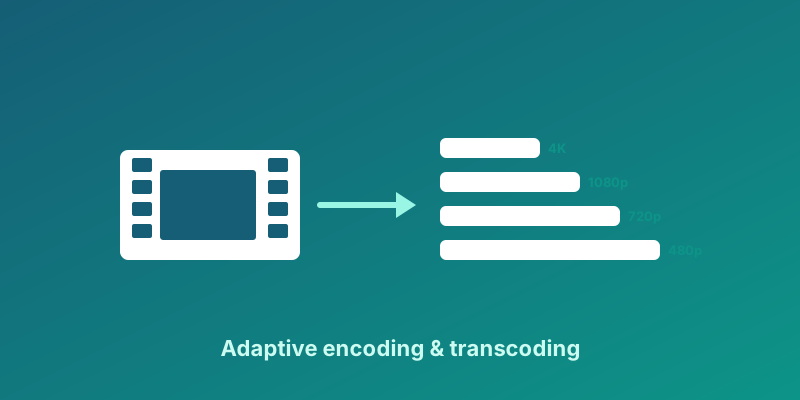
Exploring LOW Latency 4k Streaming Through VVC compresses source video into efficient formats and bitrates for smooth streaming. In streaming terms, encoding and packaging sits at the center of how audiences discover, watch and pay for your content.
How it works
Per-title and content-aware encoding analyze each video to assign just enough bitrate for the quality target, cutting delivery cost without visible quality loss.
Key benefits
- Per-title and content-aware encoding to cut bandwidth cost
- Adaptive bitrate ladders in H.264, HEVC and AV1
- Captions, multi-audio and thumbnail-track generation
Practical considerations
- Use per-title encoding to avoid over-spending bitrate on simple content
- Design the bitrate ladder around your real audience devices and networks
- Pick codecs by reach: H.264 plays everywhere, HEVC/AV1 save bandwidth on newer devices
Building this on LinqTV
LinqTV transcodes your sources into adaptive H.264, HEVC and AV1 ladders and packages HLS and DASH automatically, with per-title encoding to control cost.
Because every module shares identity, billing, metadata and analytics, you avoid brittle point-to-point integrations and ship new features faster.
Frequently asked questions
How is global performance handled?
Adaptive bitrate, edge caching and multi-CDN routing maintain quality for international audiences and high-concurrency events.
Which codec should I use?
H.264 has the widest device support; HEVC and AV1 deliver the same quality at lower bitrate but need newer hardware. Many operators encode multiple codecs and serve the best one per device.
Can we keep our existing tools?
APIs, webhooks and prebuilt connectors integrate with common CMS, CRM and payment systems, so you extend your stack instead of replacing it.
Next steps
Ready to put encoding and packaging to work? Explore LinqTV One for an end-to-end streaming platform, or talk to our team for a tailored walkthrough of how Exploring LOW Latency 4k Streaming Through VVC fits your roadmap. The links below are a good place to start.
Explore more on LinqTV