LinqTV Blog
High-Efficiency Video Codec (HEVC Video): All You Need to Know
Discover the advantages and latest advancements of HEVC Video, a high-efficiency video codec that reduces file size without compromising quality.
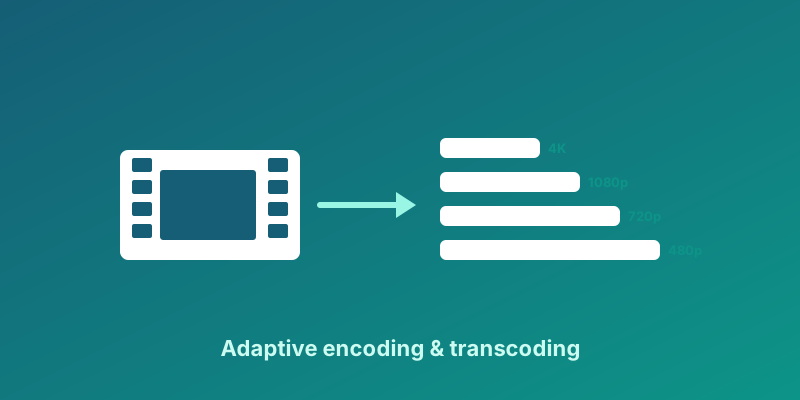
Here is what Hevc Video Codec means in practice, why it matters for encoding and packaging, and how to put it to work without rebuilding your stack from scratch.
Hevc Video Codec, explained
Hevc Video Codec turns a master file into the adaptive renditions players actually stream. In streaming terms, encoding and packaging sits at the center of how audiences discover, watch and pay for your content.
Why it matters
- Captions, multi-audio and thumbnail-track generation
- Per-title and content-aware encoding to cut bandwidth cost
- HDR, 4K and high-frame-rate support where devices allow
- Adaptive bitrate ladders in H.264, HEVC and AV1
What happens under the hood
Per-title and content-aware encoding analyze each video to assign just enough bitrate for the quality target, cutting delivery cost without visible quality loss.
How LinqTV helps
LinqTV transcodes your sources into adaptive H.264, HEVC and AV1 ladders and packages HLS and DASH automatically, with per-title encoding to control cost.
Teams typically start with a focused pilot and expand once core metrics are stable, rather than rebuilding plumbing from scratch.
Common questions
How is global performance handled?
Adaptive bitrate, edge caching and multi-CDN routing maintain quality for international audiences and high-concurrency events.
What is adaptive bitrate streaming?
It packages several quality renditions and lets the player switch between them on the fly based on bandwidth, keeping playback smooth as connections change.
Where to go from here
Ready to put encoding and packaging to work? Explore LinqTV One for an end-to-end streaming platform, or talk to our team for a tailored walkthrough of how Hevc Video Codec fits your roadmap. The links below are a good place to start.
Explore more on LinqTV