LinqTV Blog
Smart TV App Security: Ensuring a Safe Streaming Experience with LinqTV One
Protect your smart TV app with LinqTV One
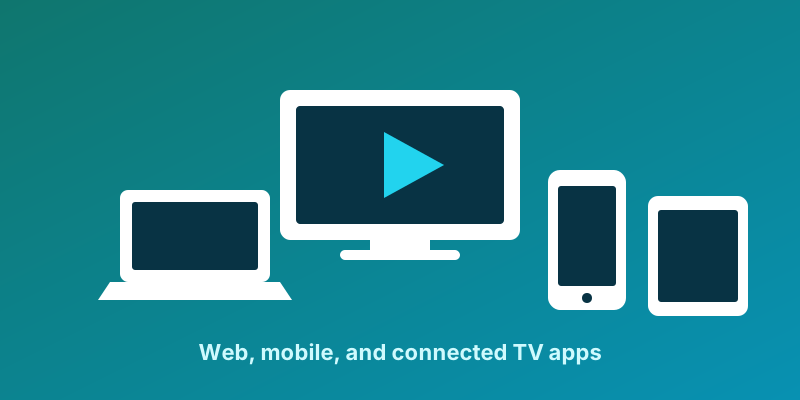
If you are evaluating Smart TV APP Security, this guide covers what it is, how it works in production, and how to deliver it reliably as part of a modern streaming service.
Understanding Smart TV APP Security
Smart TV APP Security puts your catalog on the big screen and in every pocket through device-native applications. In streaming terms, multi-device apps sits at the center of how audiences discover, watch and pay for your content.
What happens under the hood
A shared backend powers native apps built to each platform store guideline, so sign-in, entitlements and continue-watching follow the viewer from phone to living-room TV. Each app is tuned to its remote, input model and store certification rules.
What you gain
- Single sign-on and shared watch history across every device
- Store-compliant builds and managed certification submissions
- iOS, Android and responsive web from the same content backend
- Native apps for Roku, Fire TV, Apple TV, Android TV, Samsung, LG and more
- Casting via Chromecast and AirPlay plus game-console apps
What to watch for
- Budget for store certification timelines on each TV platform
- Test real devices, since codec and DRM support varies by model and year
- Design for the remote and 10-foot UI on TV, not just touch
How LinqTV helps
LinqTV ships and maintains native apps for web, mobile and every major TV platform from a single content backend, with shared sign-in and watch history.
Teams typically start with a focused pilot and expand once core metrics are stable, rather than rebuilding plumbing from scratch.
Questions teams ask
Will a subscription carry across devices?
Yes. With shared identity and billing, a viewer signs in once and their plan, entitlements and continue-watching follow them to every device.
Can we keep our existing tools?
APIs, webhooks and prebuilt connectors integrate with common CMS, CRM and payment systems, so you extend your stack instead of replacing it.
Does it work for both live and on-demand?
Yes. The platform supports live events, on-demand catalogs, audio and linear channels with shared identity, billing and analytics.
Next steps
Ready to put multi-device apps to work? Explore LinqTV One for an end-to-end streaming platform, or talk to our team for a tailored walkthrough of how Smart TV APP Security fits your roadmap. The links below are a good place to start.
Explore more on LinqTV