LinqTV Blog
What are the Differences Between Roku and Fire TV?
Roku vs Fire TV - features, market, ecosystem, and growth scope. Differences between Roku and Fire TV. All you need to know about Roku vs Fire TV.
Below is a practical overview of Differences Between Roku and Fire TV, written for product, engineering and content leaders who need to ship a dependable streaming experience.
How Differences Between Roku and Fire TV works
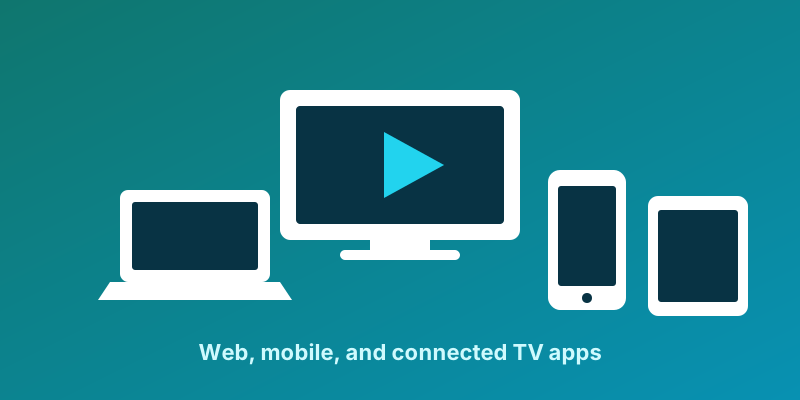
A shared backend powers native apps built to each platform store guideline, so sign-in, entitlements and continue-watching follow the viewer from phone to living-room TV. Each app is tuned to its remote, input model and store certification rules.
A shared backend powers native apps built to each platform store guideline, so sign-in, entitlements and continue-watching follow the viewer from phone to living-room TV. Each app is tuned to its remote, input model and store certification rules.
Why it matters
- Native apps for Roku, Fire TV, Apple TV, Android TV, Samsung, LG and more
- Store-compliant builds and managed certification submissions
- iOS, Android and responsive web from the same content backend
- Single sign-on and shared watch history across every device
- Casting via Chromecast and AirPlay plus game-console apps
The LinqTV approach
LinqTV ships and maintains native apps for web, mobile and every major TV platform from a single content backend, with shared sign-in and watch history.
Because every module shares identity, billing, metadata and analytics, you avoid brittle point-to-point integrations and ship new features faster.
Best practices
- Budget for store certification timelines on each TV platform
- Design for the remote and 10-foot UI on TV, not just touch
- Test real devices, since codec and DRM support varies by model and year
Common questions
Do I have to build each TV app separately?
Each platform has its own SDK and store rules, but a managed platform builds and maintains them for you from one backend, so you publish everywhere without separate engineering teams.
Does it work for both live and on-demand?
Yes. The platform supports live events, on-demand catalogs, audio and linear channels with shared identity, billing and analytics.
How is global performance handled?
Adaptive bitrate, edge caching and multi-CDN routing maintain quality for international audiences and high-concurrency events.
Take the next step
Ready to put multi-device apps to work? Explore LinqTV One for an end-to-end streaming platform, or talk to our team for a tailored walkthrough of how Differences Between Roku and Fire TV fits your roadmap. The links below are a good place to start.
Explore more on LinqTV